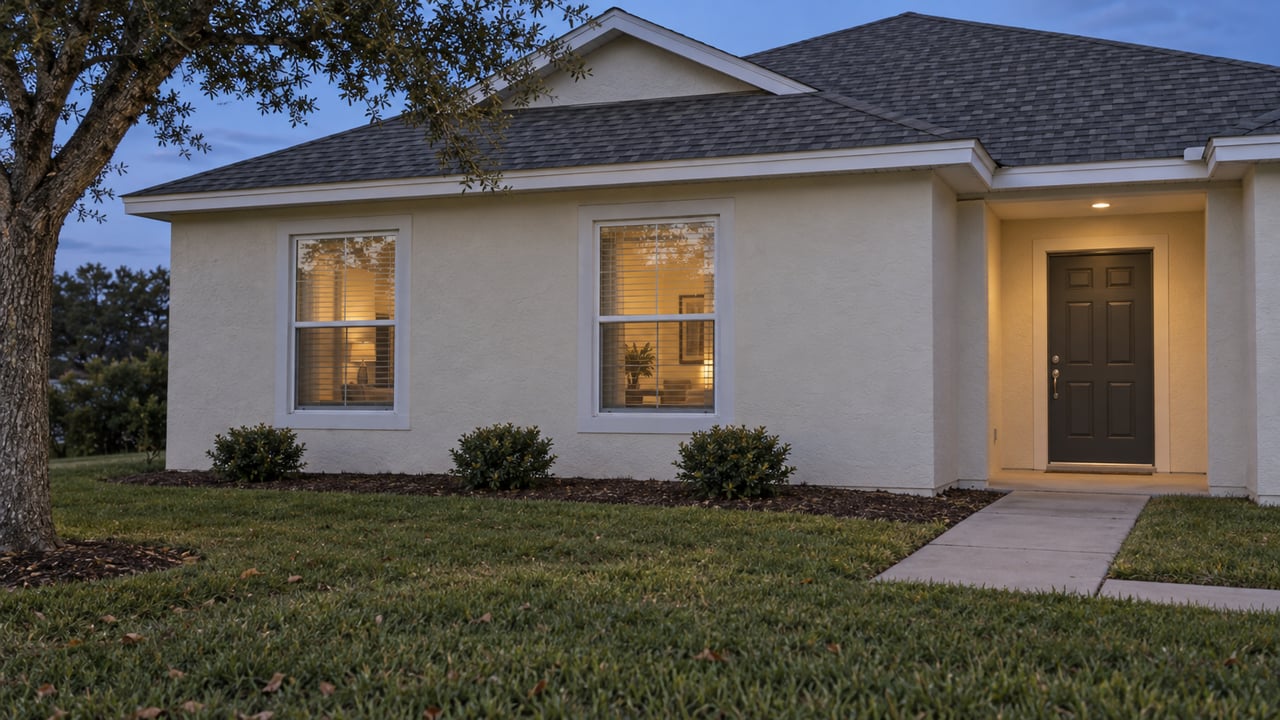
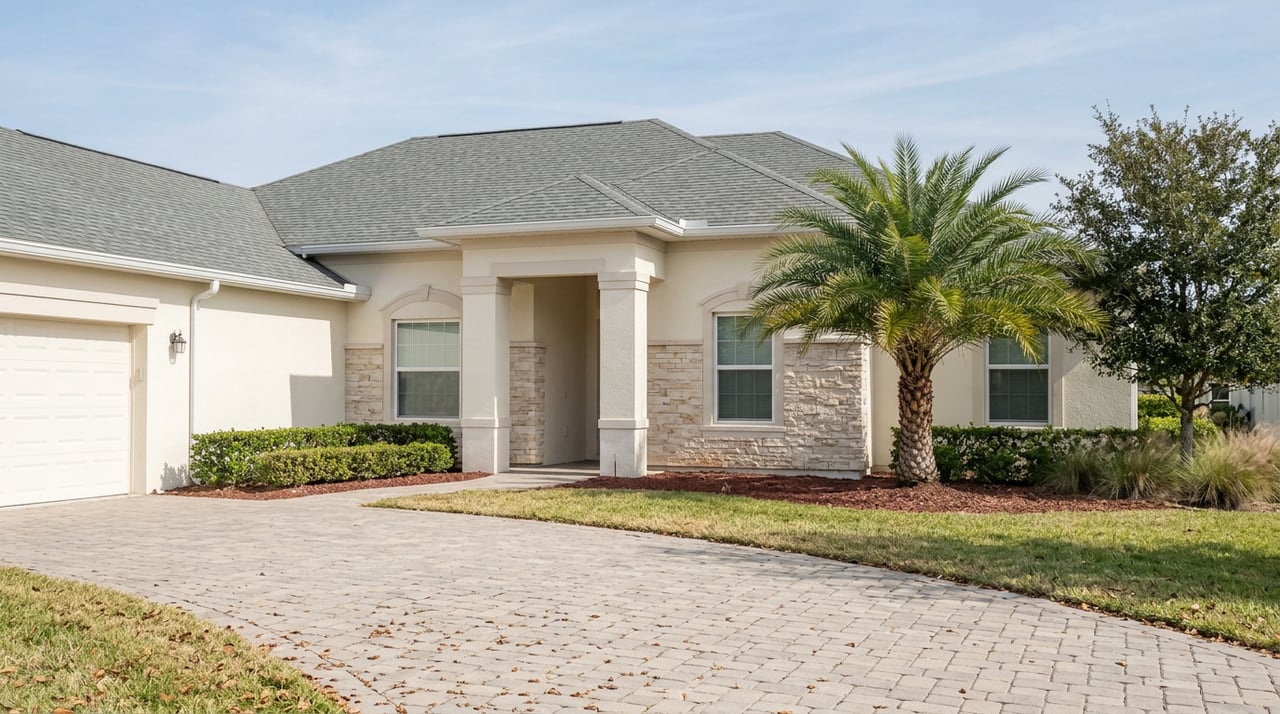
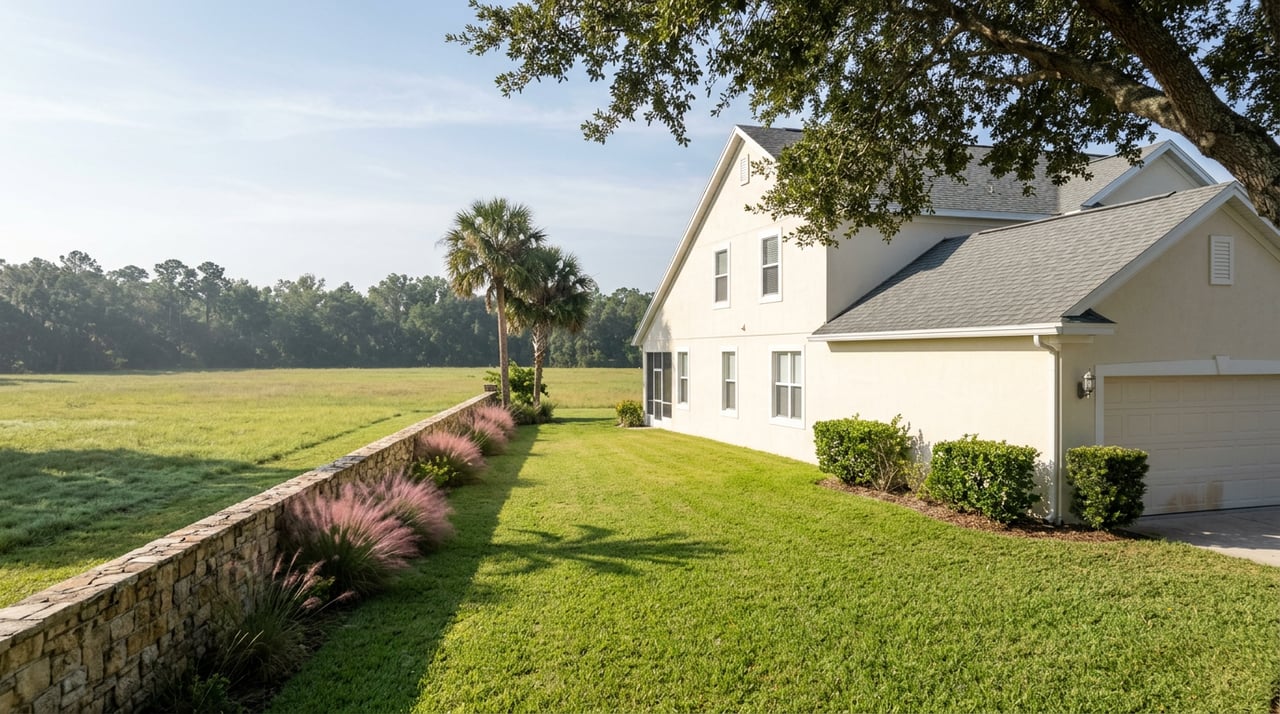
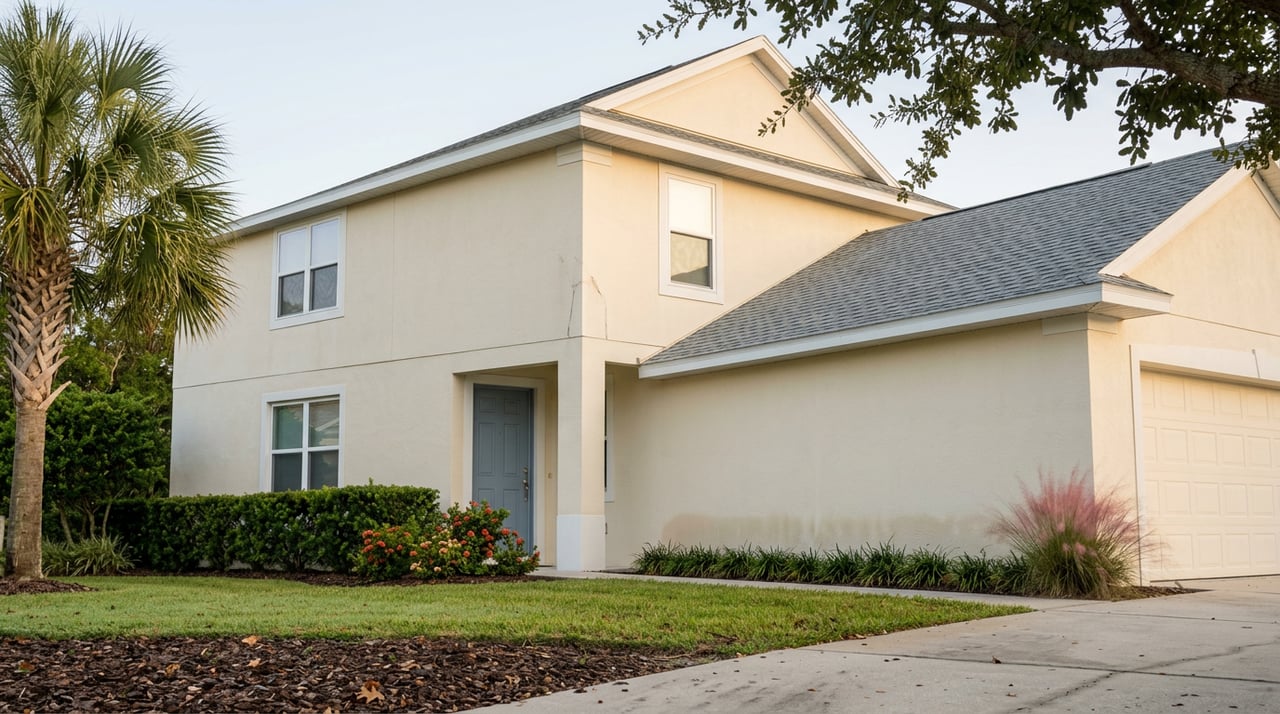
I had a buyer this year who pulled up two New Tampa listings side by side on her phone, both priced at $450,000, both three bedrooms, both built around the same year. She asked me a fair question: if they're the same price, why does one feel more expensive? The honest answer took longer than she expected, and it had nothing to do with the house itself. It had to do with a line on the tax bill that doesn't show up in the listing photos.
That line is the Community Development District assessment, and whether a New Tampa home carries one, and how much, can move the real monthly cost of two identically priced houses by hundreds of dollars a year. Understanding why starts with a number most people never think to question: the gap between New Tampa's median home price and its average home price.
Two Prices, Two Different Stories
Over the three months ending June 2026, the median sale price in New Tampa was $450,000, down 4.1% from the same period a year earlier. That's the number most portals lead with, and by itself it tells a story of a cooling market.
But the average sale price for New Tampa in that same window was $535,000, up 18.6% year over year. That's not a typo and it's not the same market softening. It's a market where the middle is getting cheaper while the top is pulling further away from it, an $85,000 spread between the number that describes a typical sale and the number that describes the mathematical center of all sales combined.
When median and average start disagreeing that sharply, it usually means one thing: a smaller number of high-priced transactions are dragging the average upward while the bulk of ordinary sales settle lower. In New Tampa, some of that pull comes from a handful of communities where homes routinely sell well above the neighborhood median, and where a Community Development District is doing a lot of the work behind the price tag.
Where the Expensive End Lives
Cory Lake Isles is the clearest example. Built around a 165-acre lake with guard-gated entry, a beach club, and boat access, its own trailing twelve-month median sale price sits at roughly $723,000, down 4% from the year before but still nearly $273,000 above New Tampa's broader median. The Cory Lakes Community Development District has funded and maintained that infrastructure, roads, waterway upkeep, gatehouse staffing, since it was established in 1991, and it covers about 600 acres entirely within the City of Tampa.
Heritage Isles and Tampa Palms sit in a similar category. Heritage Isles is a gated, golf-course community where CDD assessments commonly appear on the tax bill for parcels tied to the clubhouse, pool, and course maintenance. Tampa Palms spans more than two dozen villages built out over decades, and it blends a master homeowners' association with district-level infrastructure financing, so whether a specific parcel carries a CDD line depends on which village it's in.
Hunter's Green tells a different story. Many of its parcels carry no CDD assessment at all. The community still has real amenities, 23 enclaves spread across 43 lakes and 65 acres of protected wetlands, plus an optional country club with an 18-hole Tom Fazio golf course, but that club membership is billed separately and isn't required to live there. The infrastructure costs that a CDD would normally finance were largely built and paid for through the standard HOA structure instead.
What a CDD Actually Buys, and Who's Paying for It
A Community Development District is a special-purpose local government, authorized under Florida Statute Chapter 190, created specifically to finance and maintain infrastructure in a planned community. Developers use CDDs to issue long-term bonds, sometimes running up to 30 years, that pay for roads, ponds, drainage, and amenity centers up front. Homeowners then repay that bond, plus ongoing operations and maintenance, through an annual assessment that shows up as a non-ad valorem line on the Hillsborough County property tax bill, separate from the HOA dues.
Here's what that has looked like in a few recent New Tampa listings I've reviewed:
| Community | Typical fee structure | Illustrative annual CDD | Monthly equivalent |
|---|---|---|---|
| Hunter's Green | HOA only for most parcels, no CDD line | $0 (verify per parcel) | $0 |
| West Meadows Promenade | HOA plus CDD | Around $1,012 | Around $84 |
| Heritage Isles | HOA plus CDD | Around $2,000 to $2,500 | Around $167 to $208 |
| Cory Lake Isles | Minimal HOA, CDD funds most infrastructure | Varies by lot size | Varies |
| Tampa Palms | Master HOA plus CDD, varies by village | Varies | Varies |
| Live Oak Preserve | HOA plus CDD, bond repayment structure | Varies by lot | Varies |
These figures are illustrative examples pulled from individual recent listings, not fixed community-wide rates. CDD assessments are generally tied to lot size, so two houses in the same neighborhood can carry different amounts.
Live Oak Preserve is worth a closer look because it shows the bond mechanics clearly. The community's CDD assessment includes a bond repayment component tied to the original infrastructure, the roads, ponds, and mitigation areas built when the community's sixteen villages, from Ashwood to Willow Bend, were developed near Turner-Bartels K-8. That bond gets paid down over the life of the district, which is one more reason the exact number varies not just by community but by how far along that particular bond schedule is.
Same List Price, Different Monthly Number
Go back to my buyer's two $450,000 listings. If one sits in Hunter's Green with no CDD and the other sits in a community carrying a Heritage Isles-style assessment of $2,500 a year, that's roughly $208 a month that never appears in the list price, the square footage, or the photos. Over a 30-year loan, that's not a rounding error. It changes what the house actually costs to hold every single month, and it's the kind of number a lender factors into your debt-to-income ratio right alongside principal, interest, taxes, and insurance.
This is also, in miniature, why New Tampa's average and median have pulled apart. Communities with heavier CDD-funded amenities, waterfront access, golf courses, resort-style clubhouses, tend to command higher sale prices, and enough of those sales in one stretch will lift the average even while the broader median cools. The $85,000 gap isn't a data error. It's the fingerprint of a market where "New Tampa" contains genuinely different cost structures depending on which gate you drive through.
The Question That Gets You the Real Number
Before writing an offer on any New Tampa home, ask for two things: the non-ad valorem assessment line on the current Hillsborough County tax bill for that specific parcel, and, if a CDD exists, the current assessment roll from the district itself. Both are public information. The Hillsborough County Property Appraiser can confirm what's currently billed, and Florida's official registry of special districts will tell you whether a given community has an active CDD at all. Reading the actual Chapter 190 statute that governs these districts is also worth ten minutes if you want to understand what a district can and can't charge for.
A Few Quick Answers
Does every New Tampa community have a CDD? No. It varies parcel by parcel. Hunter's Green commonly shows no CDD line, while Cory Lake Isles, Heritage Isles, and parts of Tampa Palms and Live Oak Preserve often do. Always confirm at the individual property level rather than assuming based on the neighborhood name.
Is a CDD fee the same thing as an HOA fee? No. An HOA is a private association that sets its own rules and dues for things like landscaping and community events. A CDD is a unit of local government that finances and maintains larger infrastructure, and its assessment is billed through the county tax collector, not the HOA. Many New Tampa homes carry both.
How do I find the exact CDD amount for a specific address before I make an offer? Pull the current property tax bill from the Hillsborough County Tax Collector and look for the non-ad valorem assessment section, then request the CDD's current adopted budget and assessment roll directly from the district. Your closing team can also request this as part of the estoppel process.
If you're comparing New Tampa communities and trying to figure out what a listing actually costs once every fee is on the table, that's exactly the kind of math I sit down and work through with clients before they ever write an offer. Shells Florida Realty knows which New Tampa streets carry a CDD and which don't, and what that means for your real monthly number. When it's time to buy or sell, call Shell!