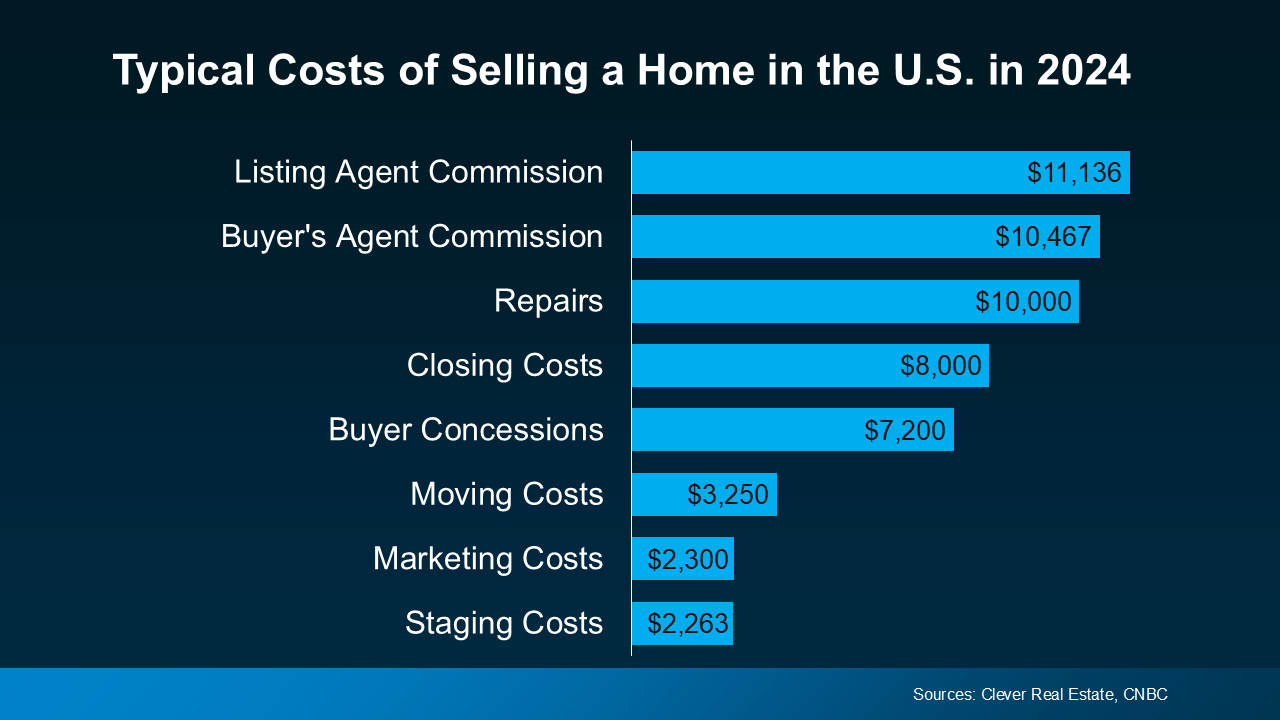
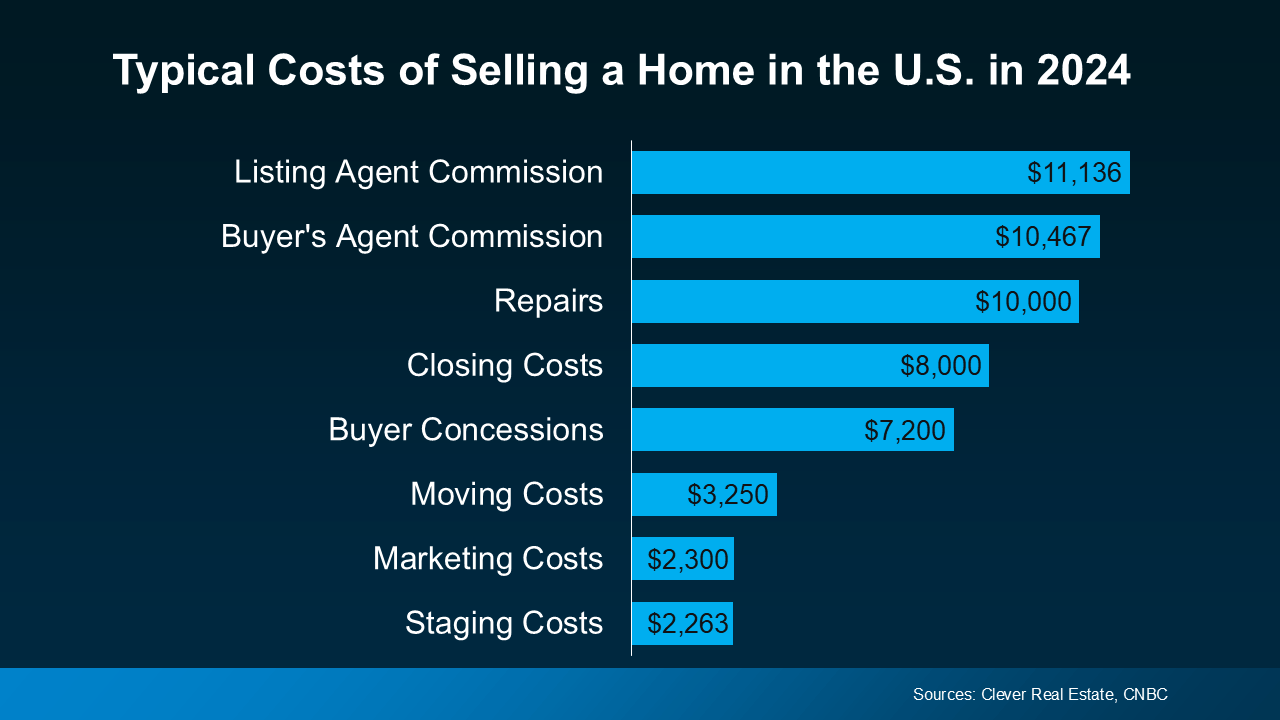
If you’re toying with the idea of selling your house, you’re probably wondering how much it’ll cost. The final number depends on factors like the offer you accept, any concessions to the buyer, repairs you tackle, and more. Here’s a ballpark overview of some expenses you’ll want to be ready for:
Most homeowners today have substantial equity built up in their homes, which can help recoup selling costs. You may even have enough leftover for your next home purchase.
Closing Costs and Commission
These are fees paid at the closing table to finalize the sale. Sellers may also contribute to the buyer’s closing costs. As U.S. News Real Estate explains:
“Closing costs are fees that are paid to finalize the transaction and transfer ownership of the home to the buyer. Sellers can expect to pay 2% to 4% of the sale price in fees and taxes on top of agent commissions. Based on the national median home sale price, this means closing costs in 2023 for sellers are about $7,740 to $15,480.”
Taxes vary by state, and agent commissions are agreed upon upfront. Current mortgage escrow or property tax credits may also offset some costs.
Pre-Listing Inspection and Repairs
Some sellers opt for a pre-listing inspection to anticipate issues buyers might request credits for. This allows you to tackle repairs before listing. Even if you skip this step, a real estate agent can guide you on cosmetic fixes, paint, and what buyers expect, ensuring your investments have the best return.
Home Staging
Staging can help your house stand out, especially as inventory grows. This may include rental furniture, art, or virtual staging for photos. According to Bankrate:
“Home sellers typically pay somewhere between $782 and $2,817 in home staging costs, though prices can vary widely.”
If you want to skip staging, your agent can suggest simple tweaks like decluttering, adjusting furniture, or depersonalizing spaces to improve the home’s presentation.
Why Leaning on an Agent Is Key
An agent offers guidance on where to trim costs and where to invest for maximum return. They provide staging advice, pre-listing repair guidance, marketing, and pricing strategies to highlight your home’s best features. This can help your house sell for more in the long run.
Bottom Line
Want a clearer picture of what to expect when selling your house? Have a conversation with a local real estate agent—they can help you plan, save, and maximize your return.